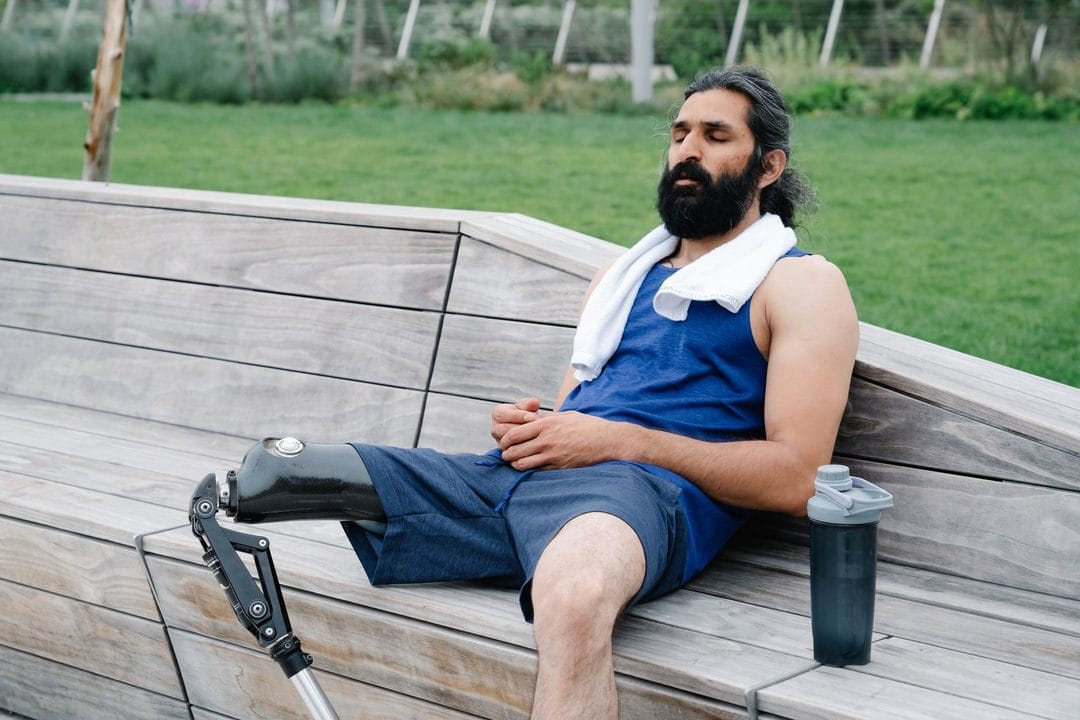
Ask a serious amateur what's limiting his racing and he'll point at his FTP, his weekly volume, or whether he should buy carbon-plated shoes. He almost never points at the thing the pros obsess over more than any single workout: when and how well he sleeps. The 2026 endurance season has made this impossible to ignore, with sports-science departments at WorldTour cycling teams and Premier League clubs treating circadian timing as a trainable variable rather than a nice-to-have. The gap between an elite athlete and a fit weekend competitor often isn't the training — it's that one of them recovers from it and the other doesn't.
Sleep is where the adaptation actually happens
The workout is the stimulus. Sleep is when your body reads that stimulus and rebuilds. Slow-wave sleep — the deep stuff in the first few hours of the night — is when growth hormone pulses and muscle protein synthesis runs hardest. Cut your night from eight hours to six and you don't lose a quarter of your recovery proportionally; the deep-sleep stages get compressed disproportionately, so you lose far more of the part that matters. This is why a hard block on five hours a night feels like running through wet sand by Thursday.
The number the labs keep landing on is brutal in its simplicity. Athletes sleeping under seven hours get injured at meaningfully higher rates than those clearing eight, and the effect compounds across a season. You can't out-train it, and no supplement closes the gap.
What the pros actually do — and what's theater
Some of the elite sleep protocol is genuinely worth copying. Some of it is sponsorship dressed up as science.
Worth copying:
- A fixed wake time, seven days a week. Not bedtime — wake time. Your circadian clock anchors to when light hits your eyes, so the consistent morning is what stabilizes everything else.
- A genuinely cold, dark room. The 65°F figure gets repeated because core temperature has to drop for deep sleep to initiate, and a warm bedroom physically blocks that.
- Caffeine cutoff eight to ten hours before bed. Caffeine has a half-life around five to six hours, so an afternoon espresso is still circulating at lights-out whether you feel it or not.
Mostly theater: the $4,000 cooling mattress pads, the blue-light glasses worn indoors at noon, the elaborate magnesium-and-glycine stacks marketed to amateurs. A Whoop or Oura ring is useful for spotting trends, but plenty of pros track nothing and sleep nine hours because their job lets them. That last part is the inconvenient truth — the amateur's real problem is usually a 6 a.m. alarm for a desk job, not a missing gadget.
The naps the data supports
A 20-to-30-minute afternoon nap, taken before about 3 p.m., measurably restores reaction time and reduces the perceived effort of a later session. Go past 30 minutes and you risk dropping into deep sleep and waking groggy, and nap too late and you steal from that night's deep stages. Real Madrid and a long list of cycling teams build the post-lunch nap into the training day on purpose, and it's one of the few elite habits a working amateur can sometimes actually replicate on a weekend.
Travel and the night before a race
Here's the nuance nobody wants to hear: the night immediately before competition matters less than people fear. Pre-race nerves wreck that one night for almost everyone, and the research is reassuring — a single bad night has limited effect on next-day performance if the preceding weeks were solid. The bank you've built over the training block is what carries you. So the obsessive pressure to sleep perfectly the night before, which ironically guarantees you won't, is misplaced.
Time-zone travel is the genuine wrecker. Crossing east is harder than west because you're asking your clock to advance. Shift your schedule 30 to 60 minutes a day in the right direction before you travel, chase morning sunlight on arrival, and accept you'll need roughly a day per time zone to feel normal.
The honest bottom line for amateurs
If you're training seriously and sleeping six and a half hours because life is full, you are leaving more on the table than any gear purchase or interval tweak could give back. Fix the wake-time consistency and the room temperature first — they're free. Buy the tracking ring only if you'll act on what it tells you.
The pros aren't faster because they discovered a secret. They're faster partly because their whole day is built around the recovery the rest of us treat as optional.