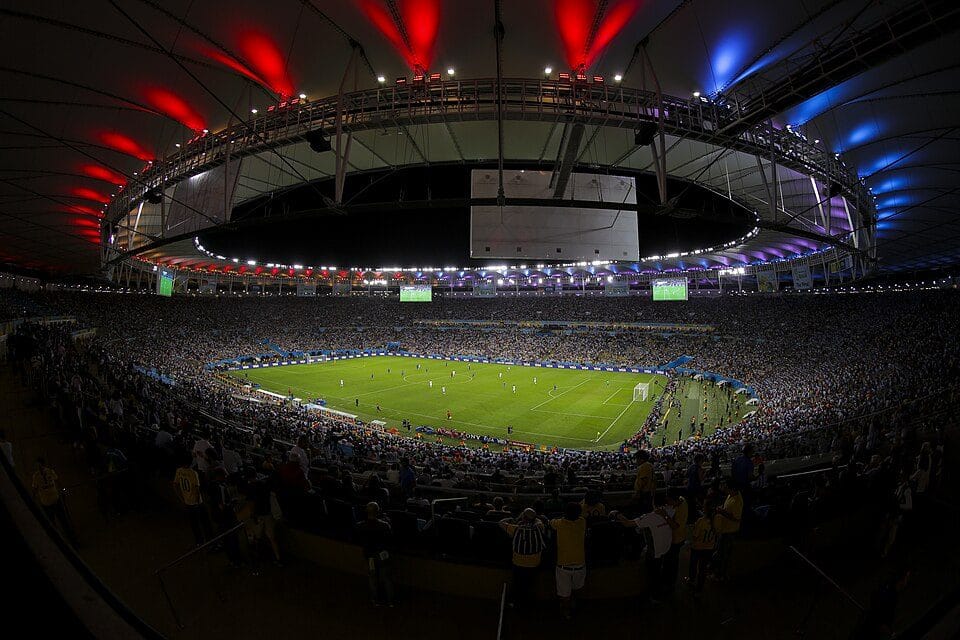
Somewhere in a training ground near the Gulf Coast, a national team's fitness coach is staring at a bracket printout and doing arithmetic that has nothing to do with tactics. The number that matters to her isn't goals or shots on target — it's eight, as in eight competitive matches a team could play between June 11 and July 19 if it goes all the way. That's not a typo, and it isn't the same tournament your father watched growing up. FIFA's jump from 32 teams to 48 for the 2026 World Cup didn't just add more group games; it inserted an entirely new knockout round, the Round of 32, that simply didn't exist in the old bracket. A finalist under the previous 32-team format played seven matches total. A finalist this summer plays eight, and outside performance departments, almost nobody has clocked what that extra match actually costs a body that's already three weeks into a tournament.
The Extra Round Nobody Budgeted For
Run the format change through the numbers and the scale of it becomes obvious fast. Twelve groups of four replaced eight groups of four, the top two from each group advance along with the eight best third-place finishers, and suddenly 32 teams survive the group stage instead of 16. Somebody has to play those extra teams off against each other before the tournament reaches the old Round of 16 structure, and that's exactly what the new Round of 32 does — a full match of knockout football bolted onto a calendar that was already tight in the 32-team era. FIFA stretched the group-stage window slightly to absorb some of the extra fixtures, but the core problem remains unsolved: the highest-stakes six weeks in international football just got one match longer for every team that keeps winning, and match load is one of the strongest predictors of soft-tissue injury in elite soccer.
What an Eighth Match Does to a Body Already Running on Empty
Elite outfield players cover somewhere between 10 and 13 kilometres per match, close to a third of it at high-speed running or full sprinting, and every one of those sprints loads the hamstrings and calves eccentrically in a way steady jogging never does. Creatine kinase, the blood marker sports scientists use as a rough proxy for muscle damage, climbs for 48 to 72 hours after a hard match and rarely resets fully before most knockout-stage teams are already back on a charter flight to the next host city. Stack four or five of these matches inside three weeks, as every team reaching the semifinals will, and the damage doesn't reset between games so much as pile up on top of itself. By the quarterfinal stage, sports scientists aren't asking whether a squad is tired; they're measuring how tired, using countermovement jump height and subjective wellness scores that flag a drop-off long before a player would ever admit to feeling it.
Add the extra round, and every team reaching this year's final is absorbing one more of these 72-hour damage cycles than a 2022 finalist ever had to (ask any club physio watching from home how many hamstrings they're quietly bracing for come August). Nobody outside performance departments is talking about this much, but it may be a bigger factor in who lifts the trophy than any single opponent standing in the bracket.
The Three-and-a-Half-Day Wall
Knockout-stage World Cup matches typically sit three to four days apart, a gap set by broadcast scheduling and stadium logistics rather than anything resembling sports-science consensus. Glycogen stores, the muscle's short-term fuel reserve, resynthesize within 24 to 48 hours given aggressive carbohydrate refeeding, so energy usually isn't the limiting factor come match day. Muscle-fibre repair runs on a slower clock, closer to 72 hours for the micro-tears caused by hard sprinting and sharp changes of direction, which means a team playing on the fast end of that three-to-four-day window sends players out with tissue that hasn't finished healing. This strain already existed under the 32-team format. The extra Round of 32 match simply means teams now hit that exact three-day turnaround one additional time on the way to a final, and the fixture list doesn't much care whether that's the smart way to run a tournament.
Five Substitutes, One Real Lever
FIFA made the five-substitute rule permanent after trialling it through the pandemic years, and it is, without question, the single biggest tool a manager has for managing this compressed calendar. Rotate aggressively in wide areas and up front, where explosive sprint actions do the most cumulative damage, and hold your centre-backs and goalkeeper steady for continuity — those are the positions where unfamiliarity costs you set-piece organisation, not raw speed. Coaches who ignore this and chase their strongest XI in every single match are gambling with exactly the kind of soft-tissue injury that ends a run in the quarterfinals rather than the final. The counterargument gets made every tournament: rotate too aggressively and cohesion suffers, the back four stops reading each other's runs, and a settled opponent punishes the disruption inside the first fifteen minutes. Both things are true at once, which is why the best performance staffs don't rotate on a fixed schedule at all — they rotate off individual player data, swapping out whoever's countermovement jump numbers dropped furthest since the last match rather than whoever simply logged the most minutes.
Beating the Clock: What the Backroom Staff Actually Do
None of the interventions themselves are exotic — most elite teams have used versions of them for a decade — but the compressed 2026 calendar puts more weight on getting each one right:
- Cold water immersion at 10-15°C for 10-15 minutes post-match, which the evidence supports for reducing perceived soreness even though its effect on actual muscle-damage markers is genuinely debated among sports scientists
- Sleep protocols built around the travel schedule — blackout curtains packed in team luggage, melatonin timed to the destination time zone rather than the departure one, and naps scheduled to protect the 90 minutes of deep sleep that does most of the physical repair work
- Compression garments and leg elevation during the six-to-eight-hour charter flights between host cities, which sounds minor until a quarterfinal draw means crossing three US time zones inside 96 hours
- A central defender who covered 9km burns through glycogen very differently than a winger who covered 13, which is why individualised carbohydrate loading has replaced the old blanket team diet on most staffs
- Contrast baths, foam-rolling protocols, and match-day-minus-one mobility work round out the list, among other smaller interventions that rarely make headlines but add up over eight matches
None of this is new science, and that's rather the point. The teams still standing deep into July aren't the ones with a secret recovery hack — they're the ones executing the unglamorous fundamentals with zero gaps, for eight matches running instead of seven.
The Heat Map That Decides Who's Still Standing in the Semifinals
Geography adds a second layer of punishment on top of the fixture congestion, and it isn't distributed evenly across the bracket. Houston in July averages highs near 34°C with humidity that regularly pushes the heat index past 40°C, Monterrey isn't much kinder, and even Kansas City's supposedly milder Midwest summer routinely clears 32°C with enough humidity to turn a 90-minute match into a heat-management exercise rather than a straightforward football game. Teams routed through these venues during the knockout rounds are effectively playing a harder, hotter tournament than teams whose bracket keeps them closer to Vancouver or Seattle, where summer highs typically sit nearer 22-24°C. FIFA's cooling-break protocol — mandated stoppages near the 30th and 75th minute once heat-stress readings cross a set threshold — helps, but it doesn't erase the underlying problem: a player's core temperature climbs through a match regardless of two scheduled pauses, and the physiological cost of ninety minutes at 34°C doesn't reset just because the referee blew a whistle.
Estadio Azteca sits at roughly 2,240 metres above sea level, and any team drawn there deals with reduced oxygen availability stacked on top of everything else — the same altitude effect that shapes distance-running strategy in the Andes, just compressed into ninety minutes of sprinting instead of a marathon. Visiting squads that fly in only the day before typically perform worse than either the teams that arrive a full week early to partially acclimatise, or, counterintuitively, the ones that land only hours before kickoff and treat the match as a straight sprint before altitude symptoms have time to set in. There's no clean consensus on which strategy wins more often, which is itself a useful reminder that not every problem in this tournament has a solved answer sitting in a sports-science textbook somewhere.
Who Actually Wins This War of Attrition
The teams still alive by the semifinals in late July won't necessarily be the four with the most individual talent on paper — they'll be the four whose medical and performance staffs made the fewest visible mistakes across the previous month. Watch the team sheets closely in the final week: a sudden late change to a starting XI, an unusual formation shift built to protect one specific player, a substitution made at halftime instead of reactively at the 70th minute — all of it is data leaking out about who's carrying an injury nobody has announced yet. One extra knockout round didn't sound like much when FIFA first floated the 48-team expansion years before a ball was kicked. By the time a fitness coach is staring at that bracket printout with a semifinal forty-eight hours away and half a squad not yet cleared for full training, it's the only number left that matters.